
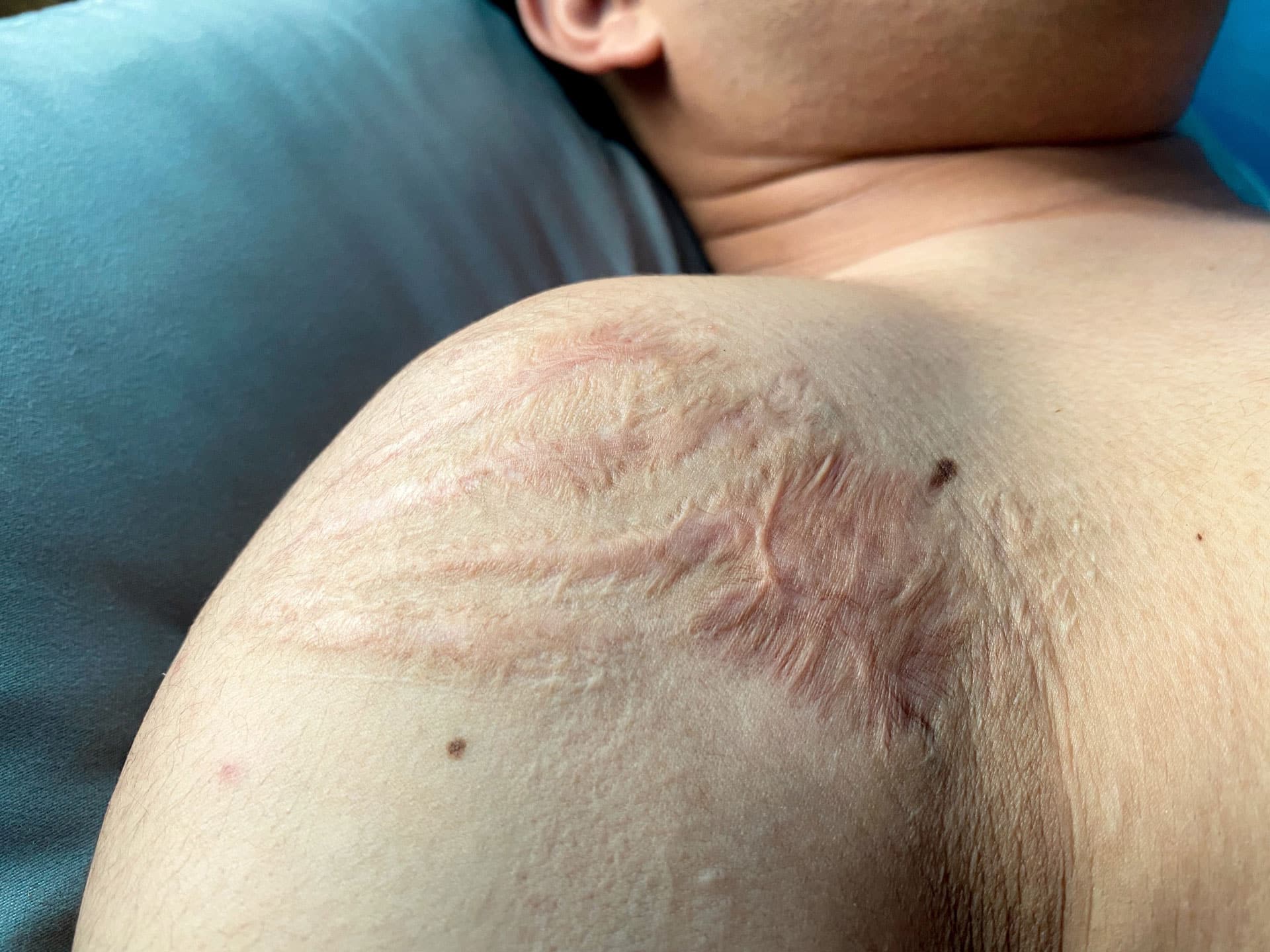
Characteristics and treatment of burn scars
Burn scars result from thermal damage to the skin, which, in severe cases, can also involve the subcutaneous tissues. Burns can be caused by fire, hot liquids, chemicals or electrical current and are classified according to their severity and their extent in:
- First-degree burns | These are the mildest burns and only involve the superficial layer of the skin. They usually heal spontaneously in 5-7 days without leaving scars.
- Second-degree burns | They affect the superficial and deep layers of the skin. Deeper burns require longer healing times and can leave scars.
- Third-degree burns | In addition to the skin, they also damage subcutaneous tissues, causing necrosis with black spots and scabs. These burns leave extensive and visible scars.
Problemi associati alle cicatrici da ustione
- Pigmentazione alterata: la pelle nell’area della cicatrice può diventare più scura o più chiara rispetto al resto del corpo.
- Briglie cicatriziali: sono fasce di tessuto cicatriziale che limitano i movimenti nella zona colpita.
- Contratture: il tessuto cicatriziale si restringe, compromettendo la mobilità di articolazioni e muscoli, soprattutto in aree come mani, collo e ginocchia.
- Impatto psicologico: le cicatrici visibili, specialmente in aree esposte, possono avere un forte impatto emotivo e psicologico, che richiede un approccio attento alla gestione della lesione.
Come trattare le cicatrici da ustione
La cura tempestiva e appropriata è fondamentale per migliorare l’aspetto e la funzionalità delle cicatrici da ustione. Tra i trattamenti più comuni figurano:
- Medicazioni compressive: essenziali per ridurre la rigidità della pelle e migliorarne l’elasticità.
- Prodotti idratanti specifici: favoriscono la rigenerazione cutanea e migliorano la biomeccanica della pelle.
- Trattamenti personalizzati: in base alla gravità della cicatrice, possono includere laser, iniezioni o interventi chirurgici per migliorare la mobilità e ridurre le irregolarità estetiche.
Problems associated with burn scars
- Altered pigmentation | Skin in the scar area may become darker or lighter than the rest of the body.
- Scar bridles | These are bands of scar tissue that restrict movement in the affected area.
- Contractures | Scar tissue shrinks, compromising the mobility of joints and muscles, especially in areas such as the hands, neck and knees.
- Psychological impact | Visible scars, especially in exposed areas, can have a strong emotional and psychological impact, requiring a careful approach to injury management.
How to treat burn scars
Timely and appropriate care is critical to improving the appearance and functionality of burn scars. Common treatments include:
- Compressive dressings | Essential to reduce skin stiffness and improve elasticity.
- Specific moisturising products | Promote skin regeneration and improve skin biomechanics.
- Personalised treatments | Depending on the severity of the scar, they may include lasers, injections or surgery to improve mobility and reduce cosmetic irregularities.
Our solutions
Do you have any questions? Contact us!
Would you like more information about the KALOIDON line products?
Please complete each field in the form below and send us your message. We will get back to you as soon as possible.