
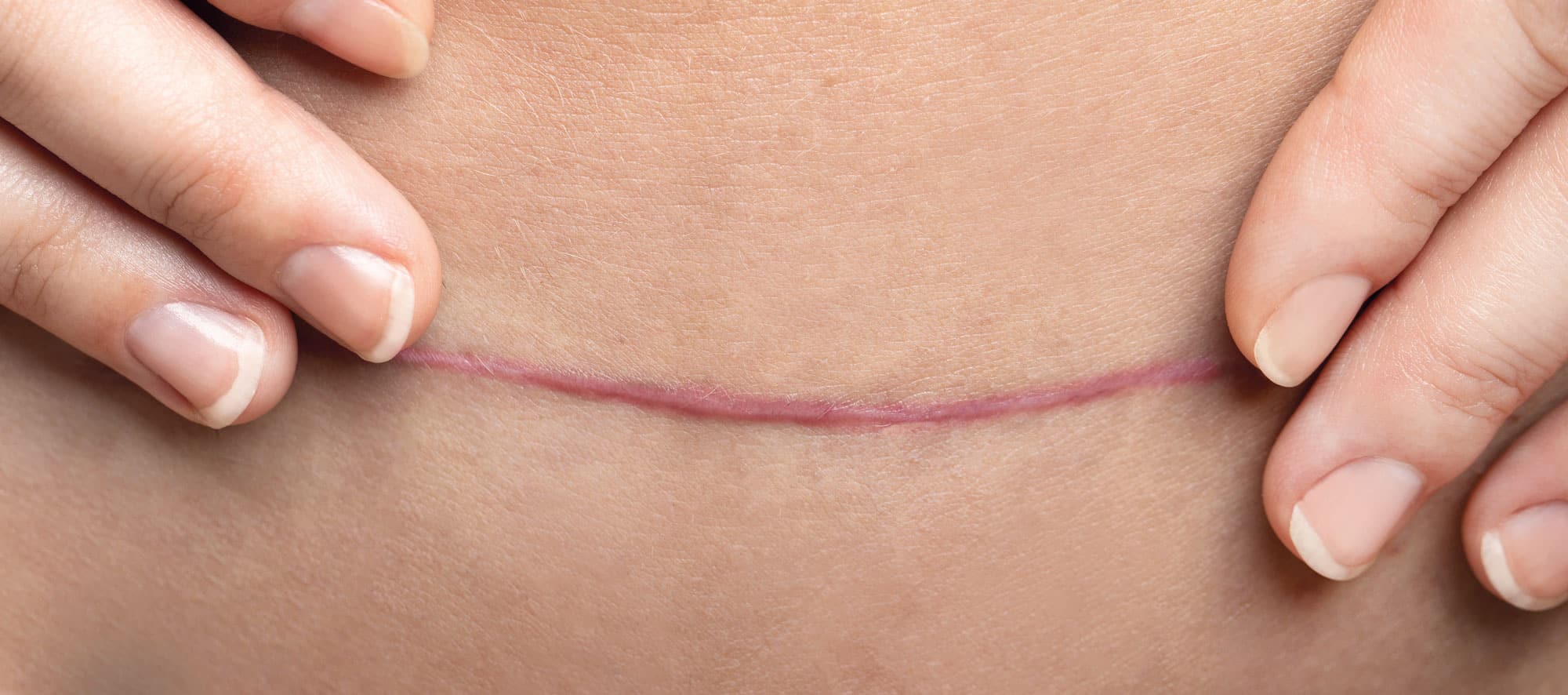
C-section: surgery and scar
A C-section is a surgical intervention that allows the birth of the baby when natural delivery is not possible or involves risks for the mother or the unborn child. During the operation, an incision is made in the lower abdomen and uterus to remove the newborn.
Over the years, c-sections have been perfected to minimise the aesthetic and functional impact of the scar. Today, the incision is horizontal, about 10-15 cm long, and is placed in the lower abdomen, making it less visible than the vertical cut used in the past.
Problems associated with c-section scars
Despite progress, C-section scarring can cause some common problems:
- Pain and tenderness | In the scar area, discomfort or hypersensitivity may persist for weeks or months.
- Internal adhesions | Scar tissue may adhere to surrounding organs or tissues, causing pain or difficulty in movement.
- Cosmetic concerns| Some scars may be more visible or irregular, which may create aesthetic discomfort in the patient.
- Complications in subsequent pregnancies | The presence of the scar on the uterus may increase the risk of uterine rupture during labour in a subsequent pregnancy.
- Infections | If not properly treated, the wound may become infected, with symptoms such as redness, swelling or abnormal secretions.
Our solutions
Do you have any questions? Contact us!
Would you like more information about the KALOIDON line products?
Please complete each field in the form below and send us your message. We will get back to you as soon as possible.